

You have arrived at the corner of Hardman Street, and Deansgate.
Engels walked here, when it was known as Parliament Street.
In this area lived the Burns family; Mary Burns, her sister Lizzie Burns, and their relatives.
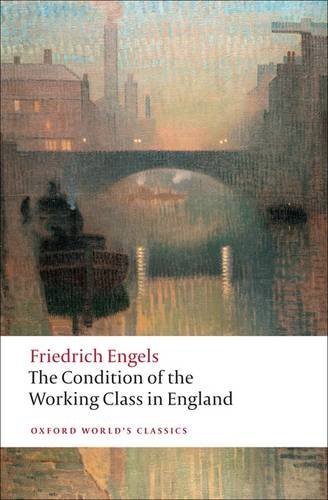
In his book The Conditions of the Working Class in England, Engels described the living conditions here, by quoting an 1830 official report from Dr. James Kay.
'In Parliament Street there is only one privy for three hundred and eighty inhabitants, which is placed in a narrow passage where effluvia infest adjacent houses, and must prove a most fertile source of disease. In this street also, cesspools with open grids have been made close to the doors of the houses, in which disgusting refuse accumulates and whence its noxious effluvia constantly exhale.'
On his return to his home town in Germany, Engels used his notes to write his most famous book, The Conditions of the Working Class in England.
'Such are the various working-people’s quarters of Manchester as I had occasion to observe them personally during twenty months.'
'If we briefly formulate the result of our wanderings, we must admit that 350,000 working-people of Manchester and its environs live, almost all of them, in wretched, damp, filthy cottages, that the streets which surround them are usually in the most miserable and filthy condition, laid out without the slightest reference to ventilation, with reference solely to the profit secured by the contractor.'
These conditions filled Engels with rage. This was 'social murder!'
He wrote. 'I once went into Manchester with such a bourgeois, and spoke to him of the bad, unwholesome method of building, the frightful condition of the working-peoples quarters, and asserted that I had never seen so ill-built a city.'
'The man listened quietly to the end, and said at the corner where we parted'
"And yet there is a great deal of money made here, good morning, sir."
Walking notes.
Cross Deansgate turn right very shortly up Queen St which leads up to Lincoln Square.